Roughly 350 million people worldwide live with some form of chronic joint condition, and, honestly, the standard treatment options haven’t evolved much in decades. NSAIDs take the edge off but carry real long-term risks, corticosteroid injections buy time, and physical therapy is genuinely helpful but really slow. What none of these do is address the actual structural problem: cartilage that isn’t rebuilding, connective tissue that lost its blood supply, inflammatory signaling that’s stuck in a loop the body can’t exit on its own.
Peptides for joint pain and peptides for inflammation are being researched as a more targeted approach. They’re signaling molecules (short amino acid chains) that “work” directly with the cells responsible for tissue repair and immune modulation, rather than broadly suppressing the system. Research into this category has been steadily building for two decades now, and the recovery and longevity communities have been paying close attention.
How Peptides Target Inflammation at the Source
To understand why peptides are interesting here, we need to start with what’s wrong with the standard approach.
For example, Ibuprofen and other NSAIDs block COX enzymes, which cut prostaglandin synthesis and blunt pain signals. That works fine short-term. But if you want long-term NSAID use, it comes with well-documented GI, renal, and cardiovascular consequences. You’re managing pain at the cost of other systems.
Peptides to reduce inflammation take a different route entirely. Instead of suppressing the immune response wholesale, they interact with specific receptors to modulate the cytokines driving chronic inflammation – TNF-alpha and IL-6 are the main culprits – while simultaneously activating repair processes. Fibroblast activity goes up, angiogenesis kicks in. And (the most important!) collagen synthesis increases. The body’s own repair machinery gets turned on rather than turned off.
That’s what makes peptides for inflammation genuinely worth studying. They’re not just a cleaner painkiller – they’re working with a different set of biological levers altogether.
Why Peptides for Joint Inflammation Work Differently
Joint pain usually isn’t one problem. Osteoarthritis involves cartilage loss, chondrocyte dysfunction, and inflammation. A sports injury involves ligament damage, compromised blood flow to already poorly vascularized tissue, and synovial irritation on top of that. These issues tend to compound, which is why single-mechanism treatments often underdeliver.
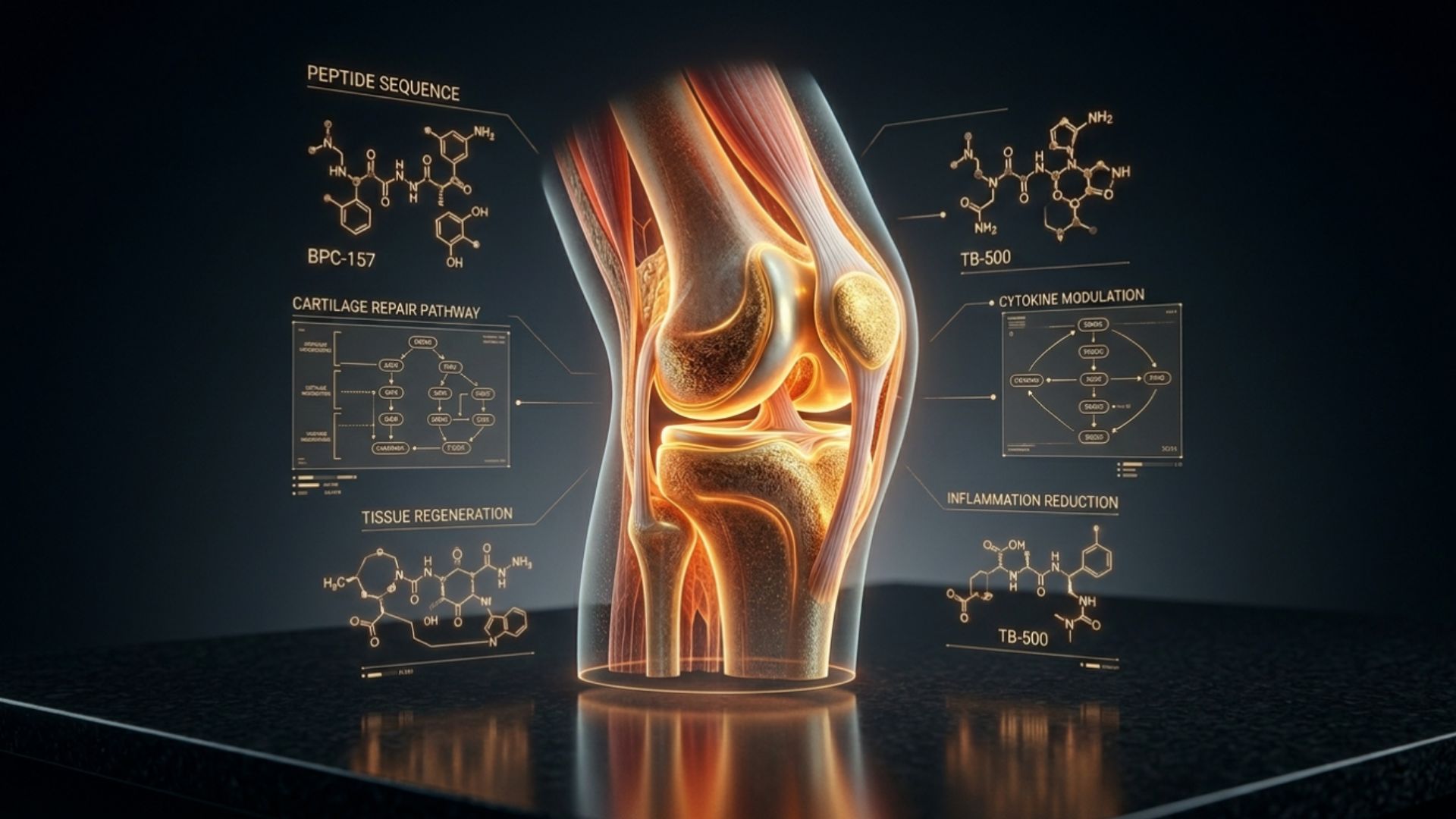
Peptides for joint inflammation have attracted research interest because some compounds appear to act on multiple components simultaneously. Chondrocyte stimulation has been observed in preclinical models – meaning actual cartilage-building cells getting activated, not just pain signals being quieted. TB-500 specifically has been shown to improve microvascular density in tissue adjacent to joints. BPC-157 research has documented cytokine suppression at the synovial level.
Whether you’re looking at peptides for joint pain from an acute injury standpoint or a chronic maintenance standpoint, this multi-pathway activity is a significant part of why researchers keep coming back to these compounds.
BPC-157 for Joint Pain: The Research Favorite
BPC-157 is where most serious research in this category starts. It’s a synthetic pentadecapeptide originally derived from a protein found in human gastric juice. Yes, sounds strange, but the gastric origin is relevant to why it’s so effective at protecting and repairing tissue that’s under stress.
The bulk of the published work on BPC-157 for joint pain and connective tissue comes from Professor Predrag Sikiric’s group at the University of Zagreb. Over a career spanning several decades, they’ve documented accelerated tendon-to-bone healing, improved ligament recovery, and meaningful anti-inflammatory effects in animal joint models – published across Journal of Physiology-Paris, Current Neuropharmacology, Molecules, and others. A 2019 review by Gwyer et al. called out BPC-157’s role in angiogenesis and growth factor signaling in musculoskeletal tissue, which helps explain why the repair effects are so consistent across different injury types.
Mechanistically, BPC-157 appears to interact with the nitric oxide system and VEGF signaling simultaneously. Rotator cuff injuries, Achilles tendon problems, knee ligament tears, and articular cartilage degradation – all of these have been studied in animal models, with repair outcomes consistently ahead of controls.
As a peptide for joint pain foundation compound, BPC-157 is hard to beat. We carry it in 10mg vials and 250mcg capsule formats, both tested by Freedom Diagnostics with batch-specific COAs on the product page.
The Best Peptides for Inflammation Beyond BPC-157
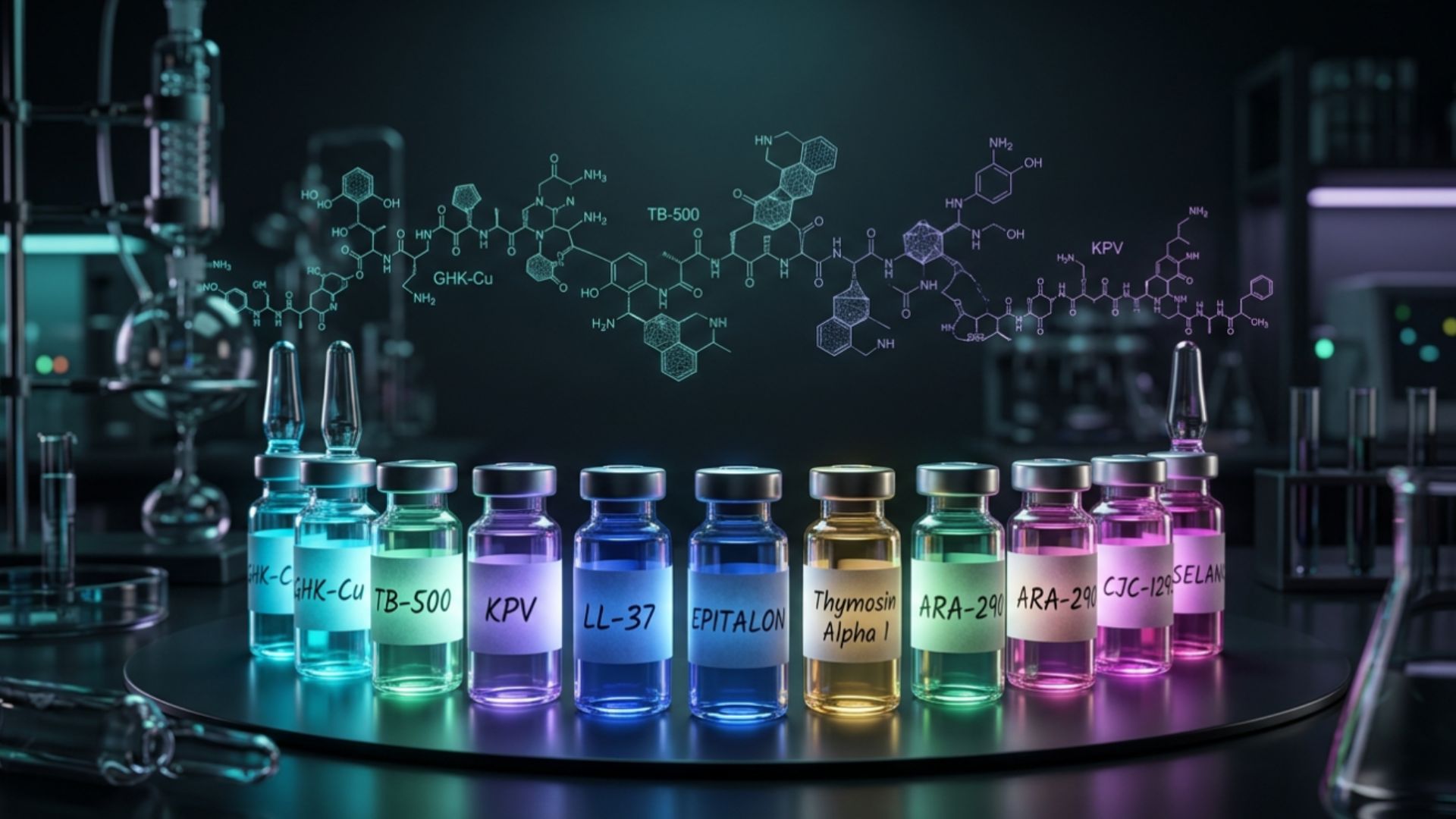
BPC-157 is usually the starting point, but the best peptides for inflammation protocols almost always bring in other compounds once researchers understand the foundational mechanisms.
TB-500 (Thymosin Beta-4) is probably the most common companion. Its core mechanism is the upregulation of actin, a protein central to cell migration and proliferation. In practical repair terms, this means:
- Faster wound healing
- Better blood vessel formation in damaged areas
- Anti-inflammatory effects
Goldstein documented TB-500’s tissue repair activity, focusing on cardiac and skeletal muscle. The complementary mechanism to BPC-157 is the real reason researchers stack them together – they’re not redundant, they’re additive.
KPV is a tripeptide (Lys-Pro-Val) derived from the C-terminal sequence of alpha-melanocyte-stimulating hormone. It’s particularly relevant for peptides for gut inflammation and systemic inflammatory conditions. Dalmasso et al. published research showing KPV’s ability to reduce inflammatory cytokine expression in intestinal epithelial cells via NF-kB signaling – a pretty central pathway in chronic inflammation. We also carry KPV as part of our KLOW 80 stack, combined with GHK-Cu, BPC-157, and TB-500.
Thymosin Alpha-1 is worth considering for anyone dealing with systemic immune dysregulation alongside joint issues. It’s been studied extensively in oncology and infectious disease contexts, and its immunomodulatory profile makes it a reasonable addition to protocols that include autoimmune activity.
These are the inflammation peptides with the strongest research backing – each hitting different pathways, which is exactly the point.
Peptides for Gut Inflammation: The Hidden Connection
Most people focused on joint pain aren’t thinking about their gut. But there’s a reasonably well-established connection worth knowing about – sometimes called the gut-joint axis – backed by recent research published in Nature Reviews Rheumatology on how gut microbiome disruption and intestinal permeability drive systemic inflammatory markers that directly worsen joint tissue degradation.
Peptides for gut inflammation, like BPC-157 and KPV, have been studied for exactly this. The Sikiric group has documented BPC-157’s protective effects on gut mucosa, including accelerated healing of intestinal lesions and reduced permeability. KPV exerts a direct anti-inflammatory effect on the intestinal epithelium. For anyone dealing with both digestive issues and joint problems – which is more common than people realize – addressing gut inflammation may genuinely shift the picture on the joint side too.
How to Stack Peptides for Joint Pain and Recovery
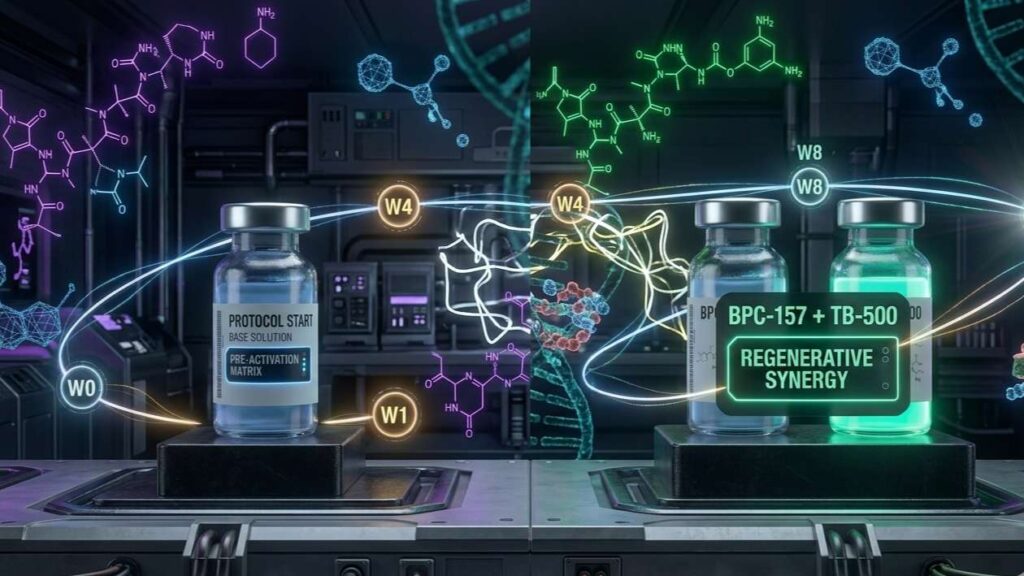
The combination that shows up most consistently in research circles is BPC-157 plus TB-500 – what the community calls the Wolverine Stack. We offer this as a pre-made blend because the mechanistic case is genuinely strong: BPC-157 supports repair signaling and connective tissue protection, while TB-500 supports cellular migration and vascularization. They work on slightly different timelines and tissue targets, which is why the combination tends to outperform either compound alone.
For broader peptides for pain and inflammation protocols, KPV gets added for gut and systemic inflammation, and Thymosin Alpha-1 sometimes gets incorporated during heavy training or immune stress. The practical starting point for most researchers is one compound at a time – get a clear sense of how your research subject responds – then layer from there.
Proper reconstitution matters. We stock bacteriostatic water specifically because it’s the right vehicle and because sourcing everything in one place reduces the margin for error. Cycling is standard practice – periods of use followed by adequate washout.
And yes, this is research-focused information. A qualified professional should be involved before anyone builds a peptide protocol.
Final Thoughts: Choosing the Right Peptides for Your Recovery Goals
The research base for peptides for joint pain isn’t preliminary anymore. BPC-157 has one of the deepest preclinical profiles in the connective tissue repair space. TB-500’s mechanisms are documented across multiple tissue types. KPV has solid published data on gut and systemic inflammation. The science is there.
The best peptides for joint pain for any given situation depend on what’s actually going on – acute injury recovery looks different from chronic joint maintenance, and systemic inflammatory conditions bring their own considerations. But the sourcing question doesn’t change regardless. A degraded or under-dosed peptide doesn’t produce results that match the literature – it just produces a protocol that doesn’t work and a researcher who blames the compound instead of the vendor.
Every product we carry undergoes third-party testing at Freedom Diagnostics, with COAs available for each batch before you order. The best peptides for inflammation are only as good as the product behind them. That part we take seriously.