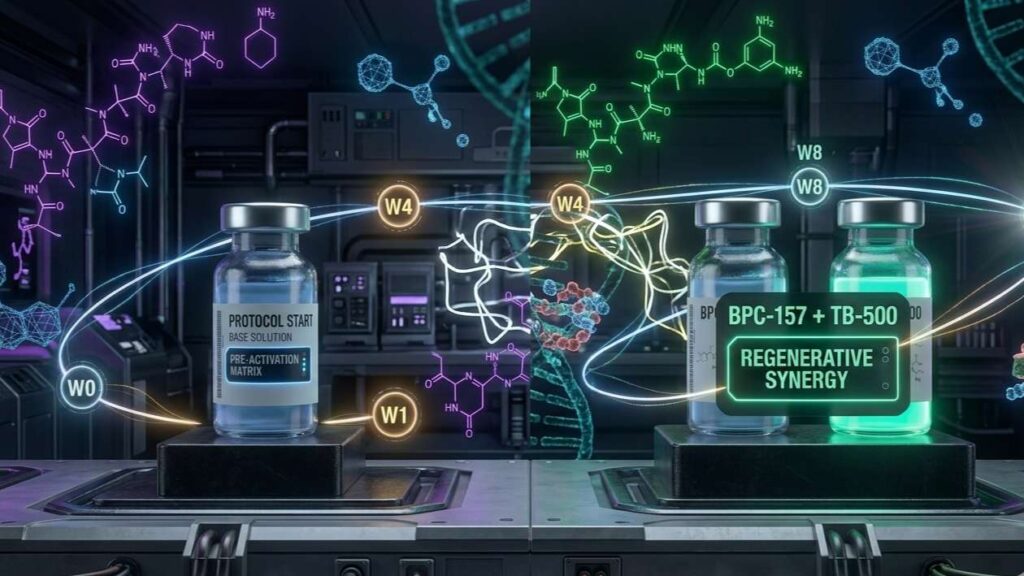
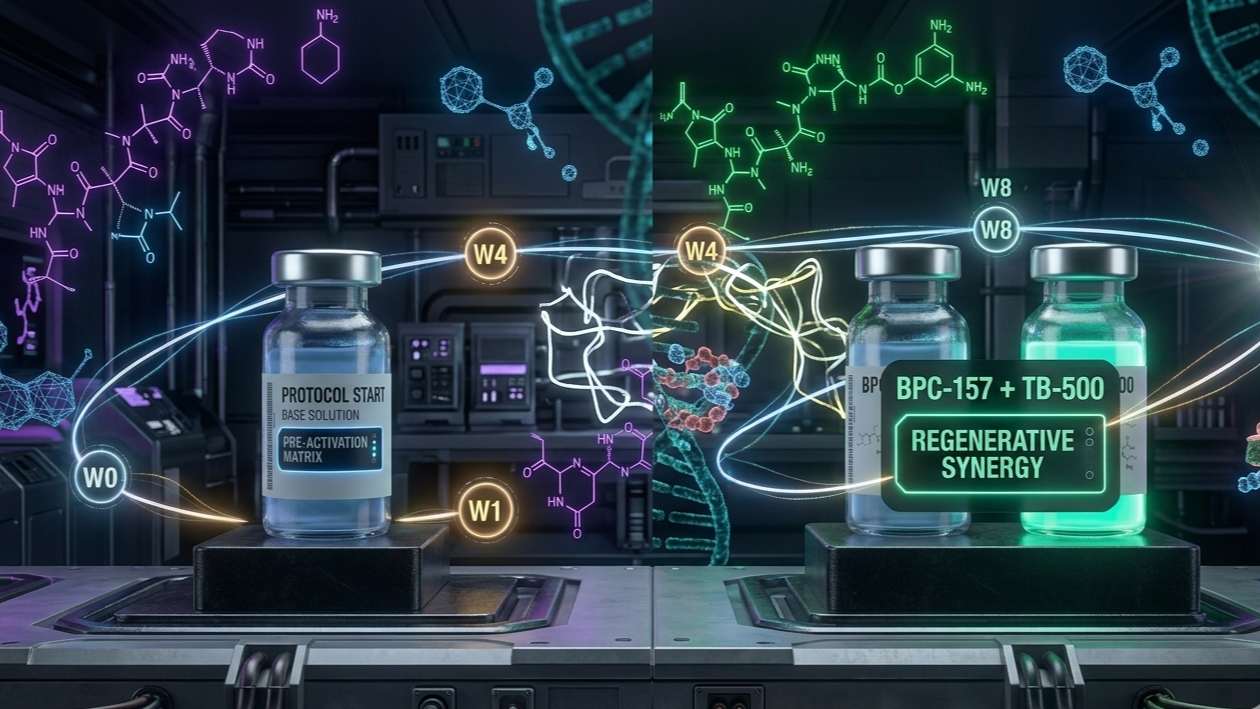
The combination of BPC-157 and TB-500 is one of the most talked-about pairings in peptide research. Scientists study it to understand better its potential effects on tissue recovery and cellular repair. The two compounds work through different biological pathways, which is exactly why researchers find them interesting to examine together – the questions this combination raises are more complex than either compound generates on its own.
Before going any further, one thing needs to be clear from the start. These are strictly research compounds. They are not approved by the FDA or any other major regulatory body for human consumption, treatment, or supplementation. This article is informational only; it outlines current scientific discussions and does not provide medical advice, personal recommendations, or clinical protocols.
What Are BPC-157 and TB-500?
To understand why researchers discuss these two peptides together, it helps to look at what each one actually is.
- BPC-157 stands for Body Protection Compound 157. It is a synthetic peptide derived from a naturally occurring sequence in human gastric juice. In laboratory settings, scientists isolate this specific amino acid chain to observe how it interacts with various tissue environments, without the presence of other digestive enzymes that would normally surround it in the body. That gastric origin is part of what makes it biochemically unusual and worth studying.
- TB-500 is a synthetic version of Thymosin Beta-4, a protein found in high concentrations across mammalian tissues. The research version focuses specifically on the active portion of the protein – the segment responsible for cell migration and actin regulation. Actin is one of the core structural proteins that shape cells and enable movement, which is why TB-500 keeps appearing in studies related to how tissue reorganizes after damage.
Neither compound holds approved status for human medical therapy or dietary supplementation. Both are manufactured and distributed exclusively for laboratory research, in vitro studies, and animal testing. In research contexts, when scientists refer to BPC 157 TB 500 dosage, they’re describing quantities administered to animal subjects within controlled studies.
Why People Discuss Combining Them
The main reason researchers find this pairing compelling is the idea of complementary mechanisms. These two compounds don’t just do similar things; they work through genuinely separate biological pathways, which makes studying them together potentially more informative than studying either one alone.
Theoretical discussions around the BPC-157 TB-500 blend supplement benefits dosage suggest that BPC-157 may influence growth factor activity and blood vessel formation, while TB-500 is believed to play a role in cell migration and actin regulation. One compound appears to affect the vascular environment. The other affects how cells physically move and reorganize within tissue. Used together, researchers hypothesize that they may simultaneously target recovery from two different angles.
Some studies also suggest that one peptide may be more effective at localized tissue damage, while the other may provide broader, more systemic signals throughout the test subject. That’s the basis of the “synergistic effect” idea – though it’s important to note these hypotheses are largely built on how each compound behaves individually in preliminary tests, not on verified data about their combined effects in humans.
Research vs. Anecdote: What’s Actually Documented
There is a real and significant gap between what official scientific literature documents and what gets shared across online forums. It’s worth being direct about that.
Most published data on these compounds comes from preclinical trials – subjects were rats, mice, or isolated cell cultures. These controlled studies have yielded interesting observations about tissue behavior, but preclinical results do not necessarily translate into safe or effective human use.
On the other side of that gap sits a large volume of anecdotal reports. People in sports and fitness communities share personal accounts of using these compounds for injury recovery, chronic pain, and performance. These accounts are numerous and sometimes detailed. But they lack scientific controls, independent verification, and long-term safety tracking. When it comes to BPC 157 and TB 500 dosage, there are simply no large-scale, peer-reviewed human clinical trials available for either compound individually or for this combination. That gap shapes everything else in this conversation.
“Dosing Protocol” Searches: What People Are Really After
When someone searches for a BPC 157 and TB 500 dosage protocol, they’re usually looking for a simple, definitive answer – exact numbers, a clear schedule, a specific duration. That’s understandable. People want something actionable.
The problem is that no universal answer exists, and the reason isn’t arbitrary. Clinical dosing standards require large-scale human trials, regulatory review, and a safety profile established through real human data. None of that currently exists for this combination. Without it, there is no official consensus on what a standard, safe, or effective amount would look like for a human being.
Even the figures from animal research aren’t directly transferable. Body weight scaling doesn’t work linearly across species. Metabolism differs. Individual variables, such as age, existing health conditions, and organ function, all affect how a compound behaves in a biological system. When discussing TB-500 and BPC-157 dosage in the scientific literature, researchers describe controlled experimental conditions, but do not provide a template for personal use. That distinction matters because misreading experimental data as personal instruction is exactly how misinformation spreads.
These compounds remain firmly in the research phase. Anyone attempting to construct a firm personal routine based on animal data is essentially extrapolating from a fundamentally different biological context, and that carries real, inherent risks.
About “Dosage Calculators” for Peptide Blends
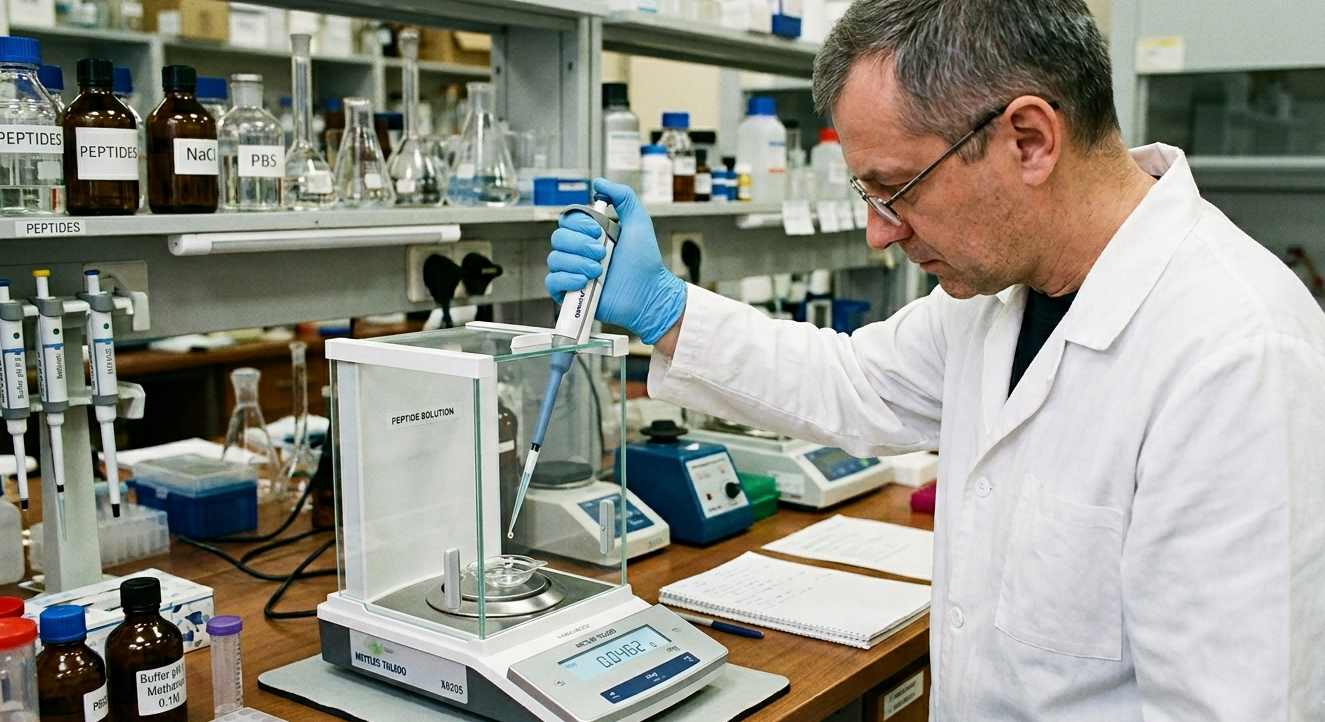
Peptide vials typically arrive as dry powder that must be mixed with a sterile liquid before use. This is why many researchers look for digital tools to help manage math. A BPC-157 TB-500 blend dosage calculator can help a researcher calculate how many micrograms of a compound are present in a specific liquid volume inside a syringe, based on the concentration of their reconstituted solution.
These tools are useful for basic unit conversions and concentration math. That’s genuinely helpful for lab work. But a calculator does not (and cannot) determine the appropriate amount for any individual or experimental application. It processes the numbers a user inputs and returns a mathematical result. It has no way of knowing the actual purity of the specific product being used, the supplier’s manufacturing standards, or the biological context of the research.
This matters because two vials labeled identically can have meaningfully different actual concentrations depending on where they were produced and how rigorously they were tested. Digital calculators rely on standardized assumptions that don’t account for supplier differences, so their output can be misleading if the input data is flawed.
At Iron Peptides, every product comes with a third-party Certificate of Analysis verified through HPLC and mass spectrometry. A calculator is only as accurate as the concentration data you feed into it, and that data is only reliable if the product behind it has been independently tested.
Reconstitution: What the Term Means
Many people searching for the BPC-157 + TB-500 blend reconstitution dosage are actually asking two questions at once: how to prepare the compound and how much to use. These are separate things, and conflating them creates confusion.
Reconstitution is a lab handling process, not a dosing decision. Peptides are typically manufactured as lyophilized powder: a dry, stable form that extends shelf life and protects the compound’s structural integrity during shipping. To use the peptide in a liquid experimental system, the powder must be dissolved. The process is reconstitution.
Think of it practically: a sterile liquid – bacteriostatic water is the standard in research settings – is carefully introduced into the vial. Hence, the powder dissolves without damaging the delicate peptide bonds. The structure of these compounds is sensitive to aggressive handling, and technique during mixing genuinely matters.
The key clarification: the amount of liquid used during reconstitution does not affect the amount of compound in the vial. It only changes the concentration of the resulting solution, how much compound is present per unit of volume. A smaller liquid volume creates a more concentrated solution; a larger volume creates a more dilute one. That’s arithmetic, not a dosing framework. Decisions about reconstitution volumes in professional research settings are made based on the specific needs of the experiment, not on any standardized general rule.
Key Takeaways and Common Questions
Can I find a safe, universal amount to use online?
No. Tools like a dosage calculator can handle unit conversions for lab setups, but they cannot produce a medically sound recommendation for any individual. These substances are not approved for human use, so there is no regulatory baseline for what a safe human dose even looks like. Any use outside a properly controlled research environment bypasses the safety infrastructure designed to catch problems before they reach people.
Are these compounds legal to buy?
Yes, but under specific legal terms. They are sold for research, laboratory, and educational purposes only. That’s not a marketing qualifier. It’s the actual legal condition of sale. These products are not cleared for use as medicines, dietary supplements, or athletic performance enhancers, regardless of how they’re labeled on individual product pages.
Why do some vials contain both peptides together?
Pre-mixed vials simplify the workflow for researchers studying both compounds simultaneously in a lab setting. Rather than managing two separate reconstitution processes and independently tracking two concentrations, a blended vial consolidates them into a single step. The BPC 157 and TB 500 dosage relationship in a pre-mixed vial still requires the same understanding of concentration; it’s a convenience for research logistics, not a signal about optimal combinations.
What should I do if I want to explore these compounds for health reasons?
Speak with a licensed medical professional. A qualified doctor can evaluate your specific health history, explain what the actual evidence shows, and guide you toward treatments with established safety profiles and regulatory approval. The science behind these compounds is genuinely interesting and worth taking seriously, which is precisely why it deserves proper engagement, not bypass.
Final Reminder: All content in this article is for educational purposes only. Research peptides carry unknown long-term risks for human use, lack official clinical safety data, and should never be used as a substitute for qualified medical advice or approved healthcare treatment.