Most people spend a lot of time searching for the right peptide, but hardly ever think about what to dilute it with. But you do realize that we’re suggesting this is the wrong approach, don’t you? The diluent you choose directly affects the product’s shelf life, how safely you can administer the preparation from the vial multiple times, and, ultimately, whether your experiment will yield the same results as those in scientific studies.
Bacteriostatic water is the standard diluent for research peptides. However, “standard” doesn’t mean that everyone understands why or how to use it correctly. That’s why in this article, we’ll break down: what it actually is, how it differs from regular sterile water, reconstitution calculations, storage requirements, and where to purchase a product that truly meets pharmaceutical-grade specifications.
What Is Bacteriostatic Water and Why Does It Matter
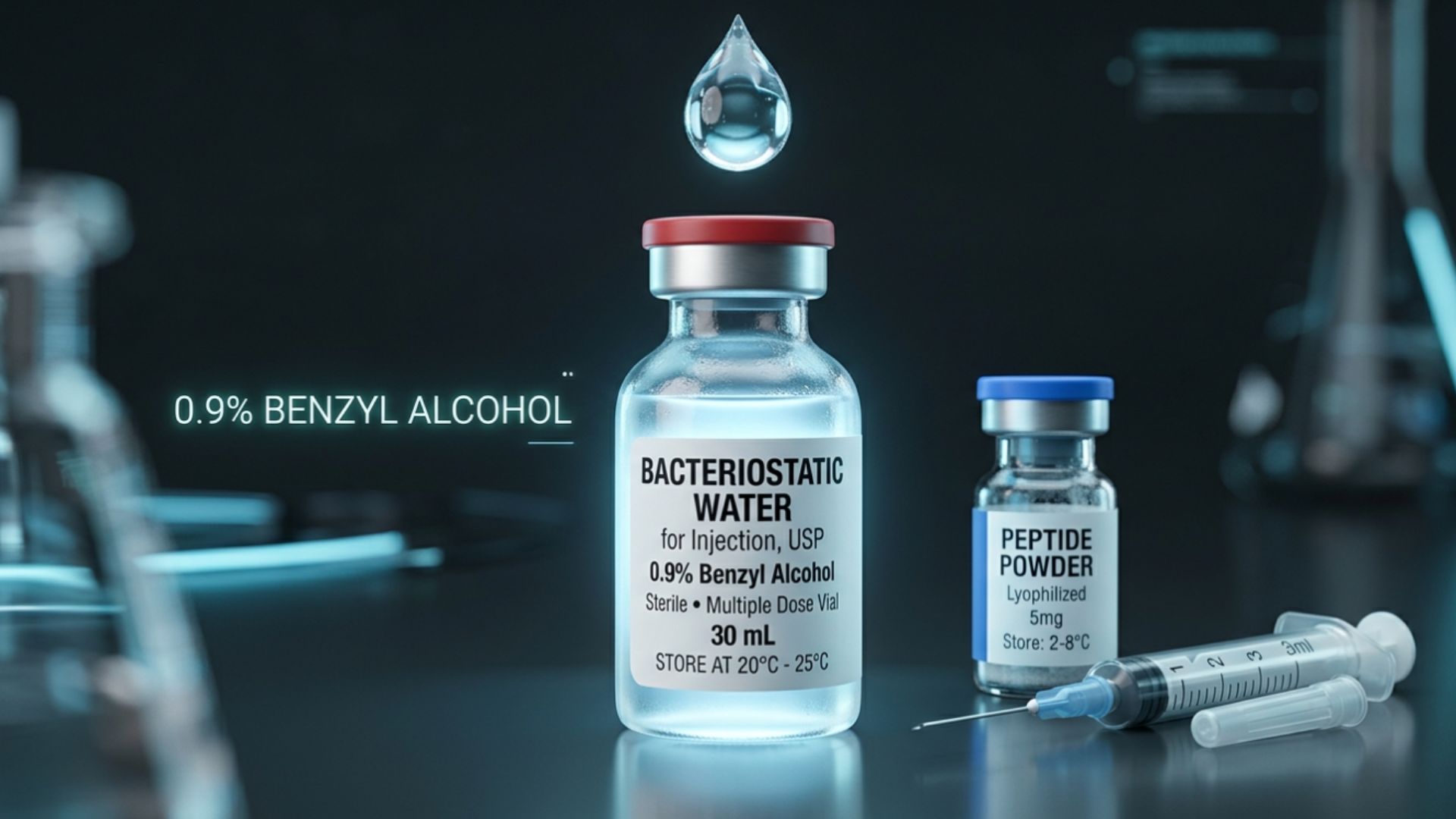
What is bacteriostatic water – the short version: its sterile water with 0.9% benzyl alcohol added as a preservative.
That benzyl alcohol is the whole point. According to the FDA’s official product labeling (available on DailyMed, NLM), bacteriostatic water for injection is defined as a sterile, nonpyrogenic preparation designed specifically for multi-dose use – meaning you can puncture the vial repeatedly over a period of weeks without introducing contamination. The benzyl alcohol doesn’t kill bacteria outright, but it prevents them from reproducing. That’s the “bacteriostatic” in the name.
For peptide protocols, this matters enormously. Most researchers work from the same reconstituted vial for 2-4 weeks, drawing a dose every day or every other day. Bacteriostatic water for peptides is what makes that safe. Without the preservative, every needle insertion is an uncontrolled contamination event. With it, microbial growth is consistently suppressed throughout the full multi-dose window.
We offer BAC solutions in 3 ml, 10 ml, and 30 ml packages precisely because this is not the kind of product you should buy from an unknown supplier without quality assurance. Furthermore, our company takes its responsibility to its customers seriously, which is why you can freely access the COA for our BAC solution.
Bacteriostatic Water vs Sterile Water: Which One to Use
Bacteriostatic water vs sterile water – the question comes up a lot, and the answer is simple.
Both are pharmaceutical-grade and sterile when the vial leaves the manufacturer. The difference is what happens after you open them. Sterile water contains no preservatives, so it’s a single-use product. Once the vial is punctured, microbial contamination cannot be suppressed. The standard guidance is to discard it within 24 hours.
Bacteriostatic water is designed for multi-dose use. The 0.9% benzyl alcohol maintains antimicrobial conditions for up to 28 days after first puncture. For any protocol where you’re drawing multiple doses from the same reconstituted vial – which is almost every peptide protocol – BAC water is the right choice.
The one exception worth knowing: individuals with benzyl alcohol sensitivity would need to use sterile water and reconstitute fresh vials more frequently. For the vast majority of research applications, BAC water is the correct call.
How Much Bac Water to Reconstitute Peptides: The Math Made Simple
How much BAC water to reconstitute peptides is the question that trips people up most. The math isn’t complicated once you understand what you’re calculating.
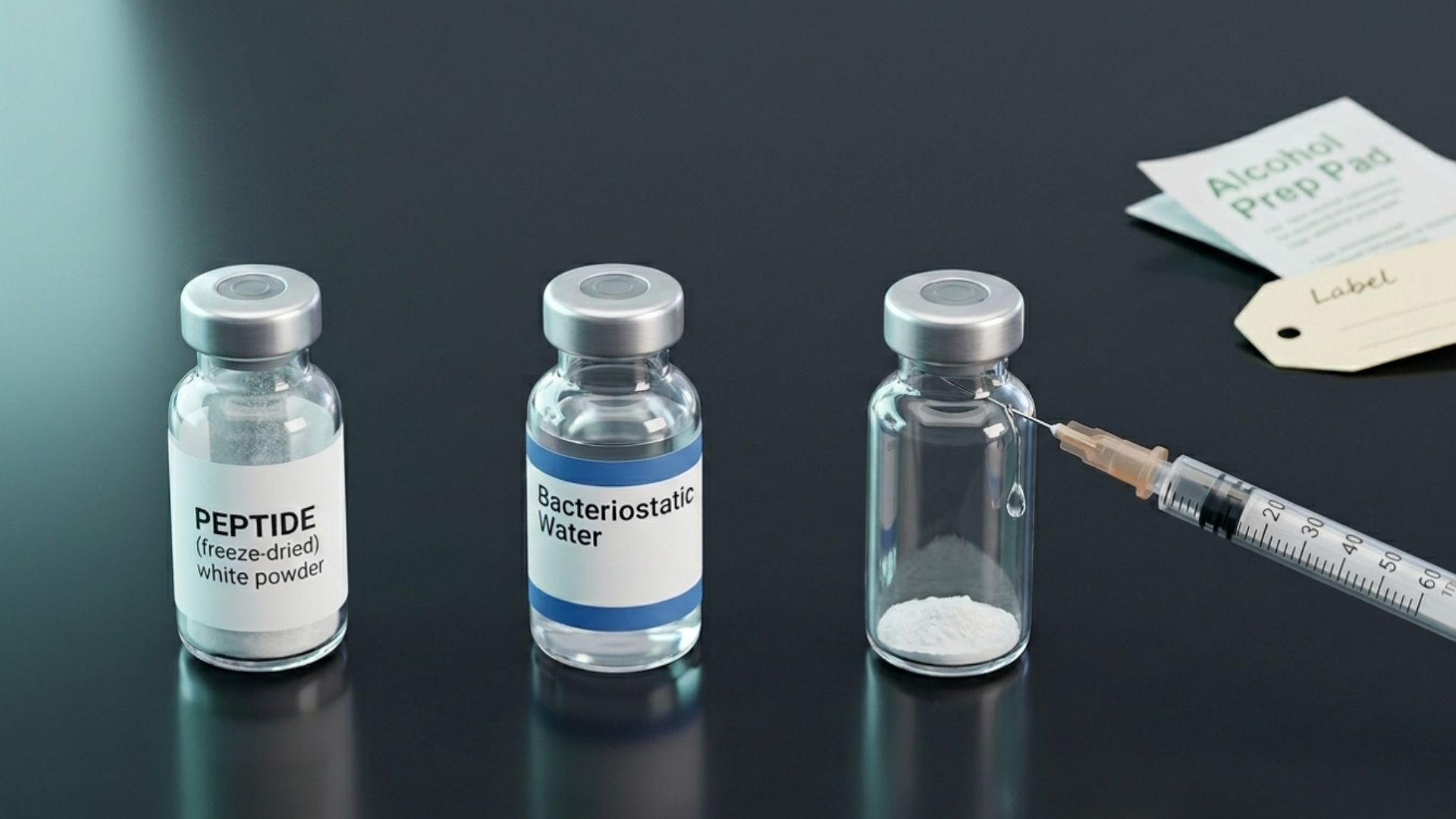
The volume of BAC water you add determines the concentration of the final solution, which then determines how much you draw per dose. The formula: total peptide mass (in mcg) divided by total BAC water volume (in ml) equals concentration in mcg per ml.
Most researchers working with 5-10mg vials end up with 1-3ml of BAC water. If the math feels unclear for your specific compound, our Peptide Calculator on the product pages handles it – you enter the vial size and desired dose, and it tells you the draw volume. It’s a small thing that eliminates a surprising number of errors.
Common Reconstitution Mistakes to Avoid
The errors that waste the most product aren’t dramatic. They’re small decisions made quickly.
Shaking the vial – not swirling, shaking – is the most common. It denatures peptides through mechanical agitation. Injecting BAC water directly onto the powder under pressure is a close second. Using distilled or tap water instead of bacteriostatic water for injection ruins the vial entirely. Failing to swab the stopper, or swabbing and not letting it dry. Storing the reconstituted vial at room temperature overnight.
Compounds like BPC-157, GHRPs, and DSIP are particularly sensitive to rough handling during reconstitution. The time you save by rushing is never worth the product you lose. Slow down, follow the steps, and the technique becomes second nature quickly.
Storage Rules: How Long Is Bacteriostatic Water Good For?
Two questions we get asked constantly: how long is bacteriostatic water good for, and does bacteriostatic water need to be refrigerated?
On shelf life: an unopened vial of BAC water stored away from light and heat has a manufacturer’s shelf life of 18-24 months; check the expiration date printed on the vial rather than relying on estimates. After the first puncture, the standard window is 28 days. After that, the preservative efficacy has degraded enough through repeated use that you should start a fresh vial regardless of how much is left.
On refrigeration: unopened BAC water doesn’t require it. For USP labeling, room-temperature storage (around 20-25°C) is the standard. Once opened, many researchers refrigerate the vial anyway – it slows microbial kinetics further and reduces evaporation through the puncture site. It’s a good habit even if it’s not strictly required.
Reconstituted peptide vials are a different situation entirely. Those need to go in the fridge immediately at 36-46°F and stay there. The peptide in solution is significantly more temperature-sensitive than the bac water component.
Where to Buy Bacteriostatic Water From Trusted Sources
Where to buy bacteriostatic water is a question that deserves a more careful answer than most people give it.
Not everything sold as BAC water online actually contains the right benzyl alcohol concentration or meets USP sterility standards. The regulatory grey zone around research supplies means mislabeling happens – and improperly preserved water used for peptide reconstitution creates contamination risks that the benzyl alcohol was supposed to prevent.
What to look for: USP-grade labeling on the vial, a clearly stated 0.9% benzyl alcohol concentration, sealed multi-dose vials, and a supplier who can tell you where the product comes from. Licensed compounding pharmacies are a reliable source. Reputable research suppliers who carry the product alongside verified peptides are another option.
We stock bacteriostatic water for injection in both 3ml, 10ml, and 30ml formats because sourcing your diluent from a separate, unknown vendor defeats part of the purpose. One order, one verified source, no gaps in the supply chain. If you have questions about what to order for a specific reconstitution scenario, our support team is there – that’s what they’re for.