There’s a version of aesthetic optimization that doesn’t involve needles full of filler or lasers pointed at your face. Researchers and biohackers have been quietly exploring it for the past few years, and GLOW peptide has become one of the most discussed blends in that conversation.
Three compounds, each with a distinct, well-researched mechanism, are combined into a single formula that simultaneously targets collagen synthesis, tissue repair, and skin regeneration. It’s not a cosmetic procedure. It’s a research-grade peptide stack working at the cellular level – where appearance actually originates.
This guide covers everything: what the GLOW peptide is and what’s in it, the evidence behind each component, how to build a protocol around it, what GLOW peptide before and after reports consistently show, how it compares to KLOW, and an honest look at side effects.
What Is GLOW Peptide? Inside the Aesthetic Blend
What is the GLOW peptide? It’s a three-compound research blend in which each component targets a different mechanism within the same repair and regeneration pathway.
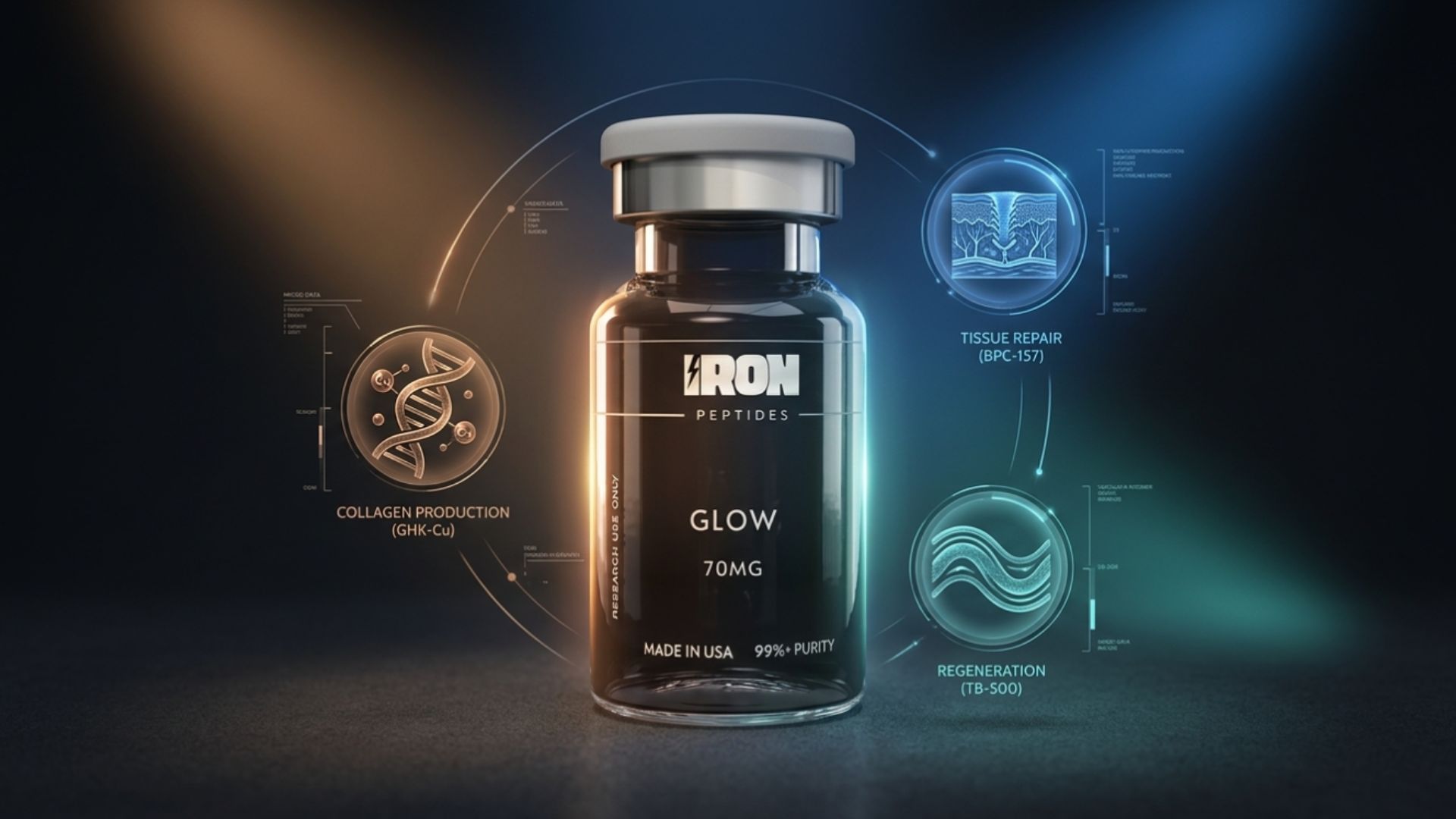
The GLOW blend peptide we carry combines GHK-Cu (glycyl-L-histidyl-L-lysine copper complex), BPC-157, and TB-500. They were selected because their mechanisms are both complementary and non-redundant:
- GHK-Cu is the aesthetic anchor of the formula. It’s a naturally occurring copper-binding tripeptide that activates gene expression pathways involved in collagen synthesis, skin remodeling, and wound healing.
- BPC-157 contributes to well-documented tissue repair signaling, including growth factor activation, nitric oxide pathway interactions, and protective effects across multiple tissue types.
- TB-500 (Thymosin Beta-4) drives cellular migration and angiogenesis, improving blood vessel density in tissues that need repair but often have compromised microcirculation.
Together, the GLOW blend peptide is hitting collagen synthesis, cellular migration, vascular support, and tissue-level repair through three distinct entry points. That’s what separates it from a single-compound aesthetic protocol.
GLOW Peptide Benefits: Skin, Healing, and Anti-Aging
The GLOW peptide benefits are worth understanding, starting with the individual research on each component, because that’s where the evidence actually lives.
GHK-Cu is the most extensively studied aesthetic peptide in the formula. Pickart & Margolina’s 2018 review documents GHK-Cu’s activation of over 4,000 genes related to tissue repair, collagen and elastin synthesis, and skin remodeling. The same review covers its effects on hair follicle biology – specifically its ability to stimulate follicle size and hair growth in animal and human studies. GHK-Cu doesn’t just support collagen production; it activates the broader regenerative machinery that makes skin elasticity, wound closure, and follicular health possible.
BPC-157’s tissue repair mechanism complements this directly. Gwyer et al.’s 2019 review documented BPC-157’s role in angiogenesis and growth factor signaling across musculoskeletal and connective tissue – accelerated tendon-to-bone healing, improved vascular response, and significant anti-inflammatory effects. Applied to the skin and superficial tissues, these same mechanisms translate into faster wound closure, reduced scarring, and improved healing after procedures or sun damage.
TB-500’s actin-upregulating mechanism was characterized in Annals of the New York Academy of Sciences, documenting its role in cellular migration and tissue repair across cardiac and skeletal muscle. In the context of the GLOW peptide, TB-500 improves microvascular density in skin tissue, which is what enables skin to sustain and express the collagen that GHK-Cu is helping to produce.
GLOW Peptide Before and After: Real User Reports
GLOW peptides’ before-and-after observations across independent biohacking forums and research communities follow a predictable timeline.
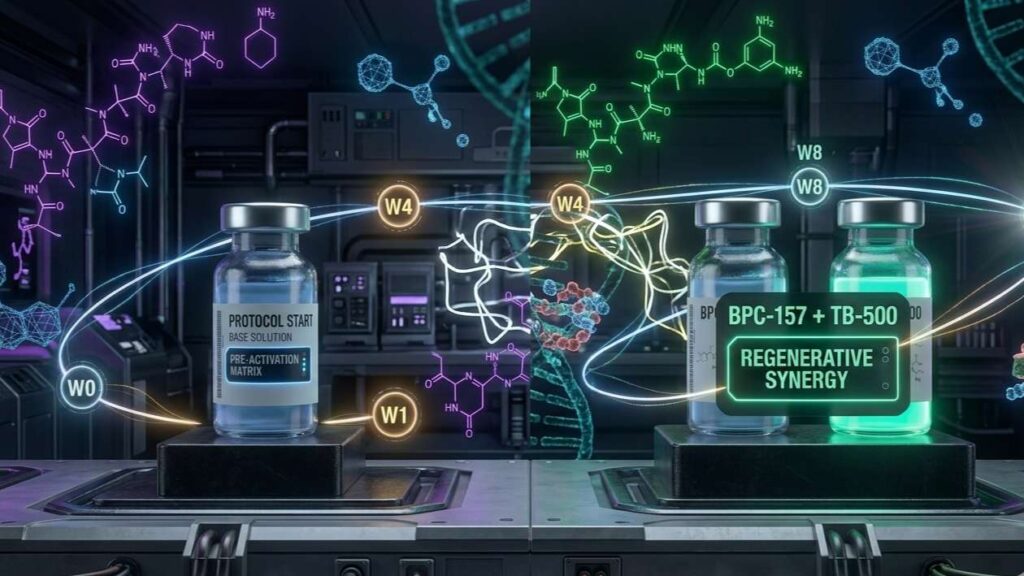
- Weeks 1-3: subtle – mostly reported as improved hydration and skin texture, with some users noting faster healing of minor cuts or blemishes. This is the GHK-Cu and BPC-157 phase, where the repair signaling is ramping up, but visible collagen changes haven’t yet accumulated.
- Weeks 4-6: the reports get more specific. Smoother skin surface, reduced appearance of fine lines, particularly around the eyes and mouth, improved luminosity (“glow” isn’t just the name – it’s the most commonly used word in user reports from this window). Hair-thickness changes start appearing here in users with follicular sensitivity.
- Weeks 7-8: the full cycle picture. Scar fading, visible skin tone improvements, and – for users running GLOW post-injury or post-procedure – significantly faster tissue recovery than their previous baselines.
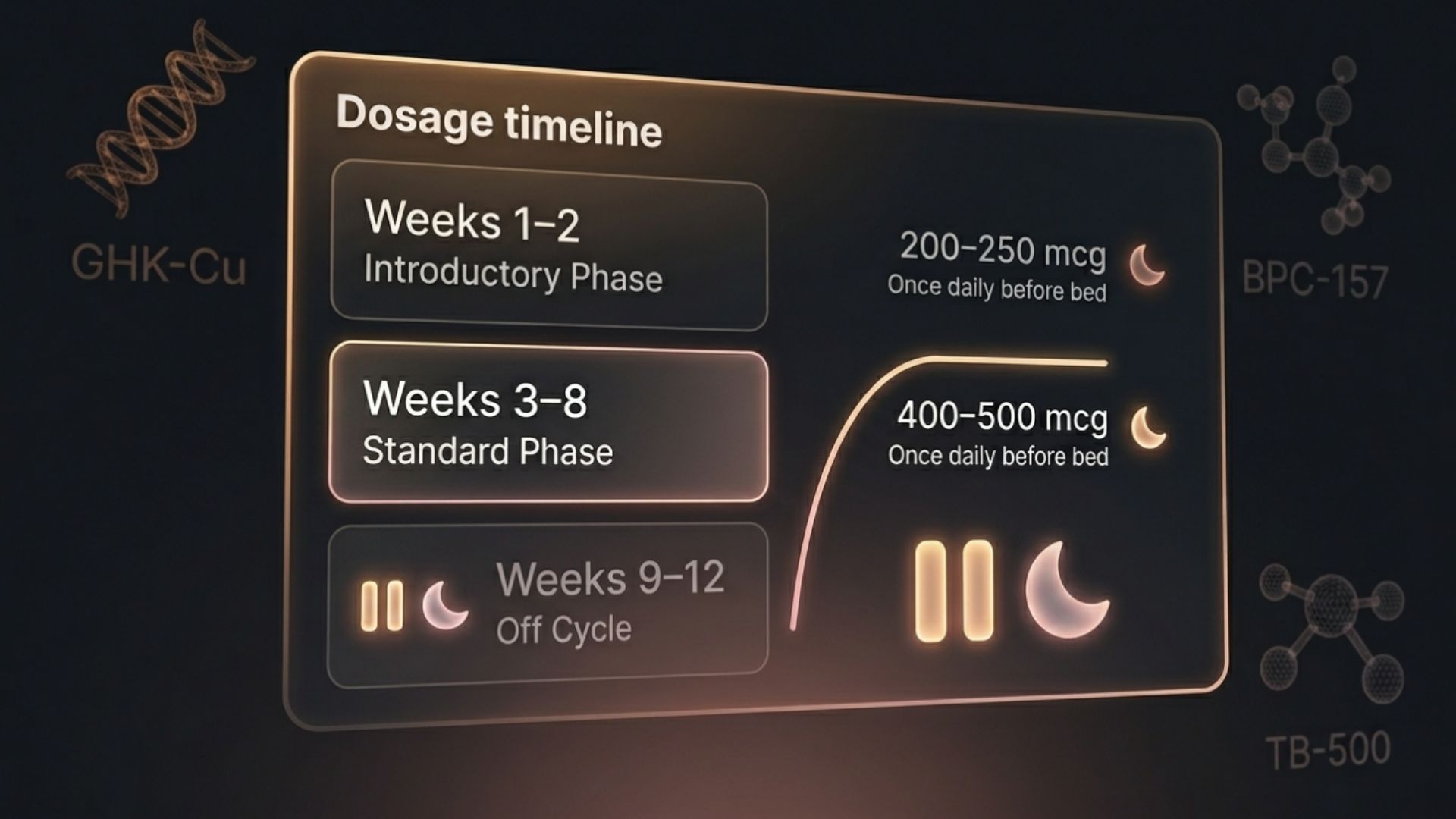
GLOW Peptide Protocol: Building Your Stack the Right Way
The standard GLOW peptide protocol is 8 weeks on, 4 weeks off. This cycle length gives GHK-Cu’s collagen-synthesizing effects time to accumulate visibly, while the off period allows receptor sensitivity to reset.
Injection site: subcutaneous, abdominal area, rotating across quadrants. The same principles from our reconstitution and injection guides apply – clean technique, fresh needle every time, alcohol swab the stopper, inject slowly down the vial wall.
Lifestyle factors that specifically amplify GLOW’s effects are worth naming:
- Adequate protein intake supports the collagen-building process initiated by GHK-Cu.
- Sleep quality determines how much of the overnight repair window GLOW can actually work with.
- Hydration affects skin elasticity independently of peptide activity.
- Sun protection is relevant because UV damage directly degrades the collagen GLOW is trying to build.
The most common protocol failure isn’t dose – it’s inconsistency. Missing injections, irregular cycles, and not completing the full 8-week window all undermine the cumulative nature of GLOW peptide results before and after. Collagen remodeling happens on a weeks-long timeline. Patience and consistency are the variables that matter most.
GLOW Stack Peptide: Layering for Advanced Results
A GLOW stack peptide approach makes sense once you’ve completed at least one solo GLOW cycle and have a clear baseline response.
The most common addition is a GHRP – Ipamorelin paired with CJC-1295 No DAC, administered at the same pre-sleep window as GLOW. Growth hormone amplifies the regenerative environment that GLOW’s components are signaling into. It’s not redundant; it’s additive.
DSIP is the next logical layer for anyone where sleep quality is a limiting factor. Deeper delta-wave sleep extends the overnight repair window – which is when both GLOW’s peptide signals and the GH pulse from a GHRP are most active. The three together (GLOW + GHRP + DSIP) before bed represent a comprehensive overnight regeneration protocol.
For users focused specifically on hair, some researchers add a standalone GHK-Cu supplement on top of GLOW to increase the total daily copper peptide load. For skin-focused protocols, NAD+ has been explored as a complementary addition given its role in cellular energy metabolism and DNA repair – though that combination requires its own research review before implementation.
Introduce one addition at a time. Two weeks of solo GLOW first. Then one new compound. Then assess before adding another.
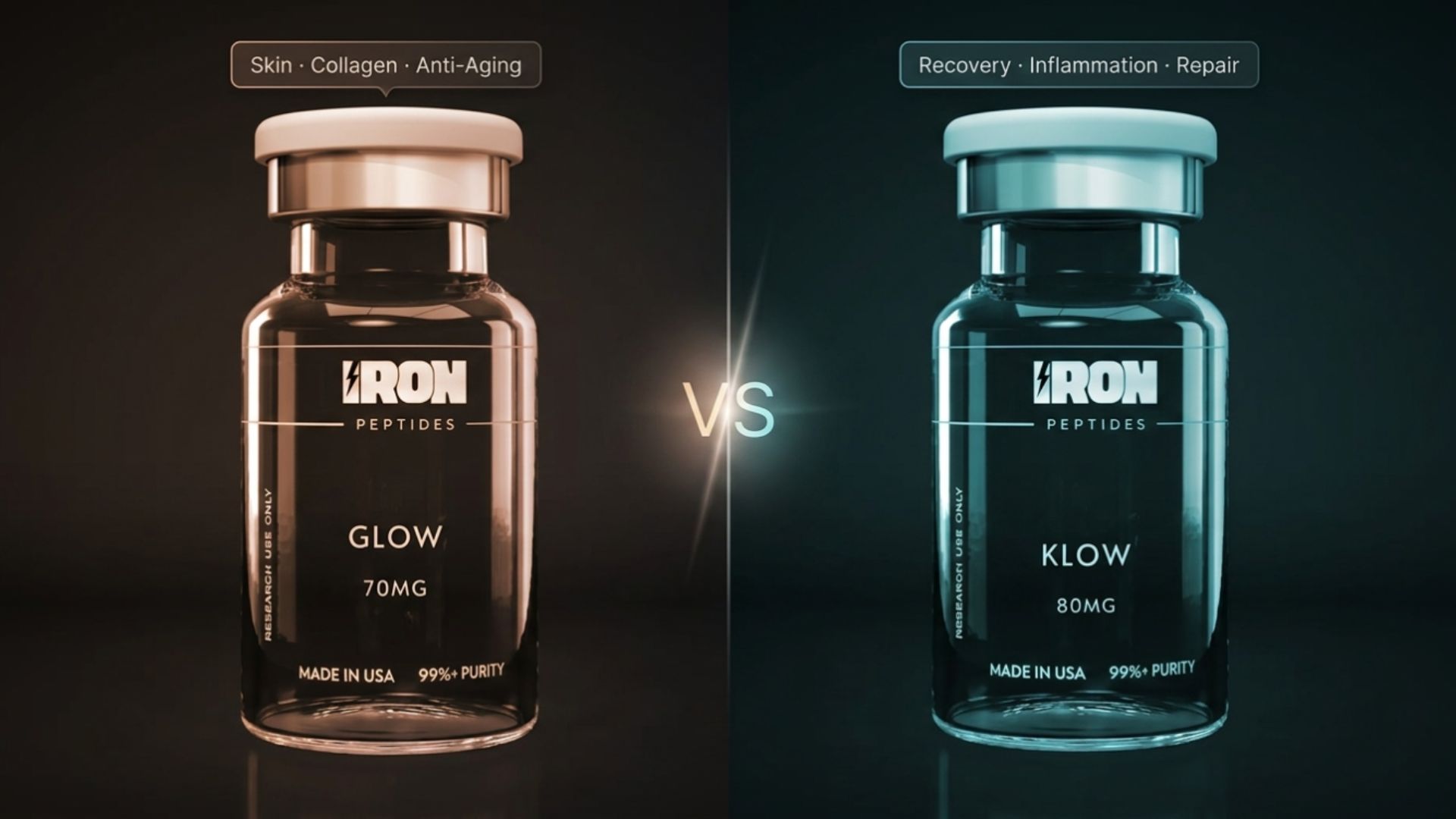
GLOW vs KLOW Peptide: Which Blend Is Right for You?
The GLOW vs KLOW peptide comparison comes up most in our inbox, and it has a clear answer once you understand what each formula actually targets.
GLOW contains GHK-Cu, BPC-157, and TB-500 – built around aesthetic and regenerative outcomes. It’s optimized for skin, hair, wound healing, and anti-aging effects, with tissue repair as the underlying mechanism across all three components.
KLOW swaps GHK-Cu for KPV (a potent anti-inflammatory tripeptide with specific gut mucosal activity) and adds a gut-lining integrity compound. The Wolverine component (BPC-157 + TB-500) is shared between them. The difference is that KLOW is designed first for inflammation management and gut repair, with tissue recovery as a secondary outcome.
If your primary goal is visible skin improvement, hair quality, or aesthetic regeneration, GLOW peptide is the more targeted formula. If you’re dealing with systemic inflammation, digestive issues, or need broad-spectrum recovery coverage alongside aesthetic goals, KLOW covers more ground. Some researchers run GLOW for aesthetic phases and KLOW for recovery-focused periods, cycling between them based on protocol goals.
GLOW Peptide Side Effects and Safety Considerations
GLOW peptide side effects reported across user communities are generally mild and injection-related rather than compound-related.
The most common: temporary redness, minor bruising, or a small welt at the injection site. These typically resolve within an hour and are usually a technique issue – improper angle, injecting too quickly, or not rotating sites – rather than a reaction to the compounds themselves.
Some users report mild fatigue or flushing in the first few days of a new cycle. This is consistent with initial immune and hormonal adjustment and typically resolves within a week.
GHK-Cu at higher doses has been associated with temporary changes in skin pigmentation in some individuals. This is dose-dependent and generally reversible.
Freedom Diagnostics tests our GLOW product with batch-specific COAs. If you have pre-existing conditions or are taking other medications, consult a qualified healthcare professional before starting any peptide protocol.
Final Thoughts: Is GLOW Peptide Worth Adding to Your Routine?
GLOW peptide has earned its position as one of the most effective aesthetic research blends available – not through marketing, but through a component profile with genuine published evidence behind each compound and consistent user-reported outcomes that track with that evidence.
The GLOW blend peptide delivers collagen stimulation, tissue repair, and support for angiogenesis in a single evening injection. GLOW peptide dosage range across an 8-week structured GLOW peptide protocol is the reference framework – and GLOW peptide before and after results depend almost entirely on how consistently that protocol is followed and how clean the sourcing is.
Compared to KLOW, the GLOW vs KLOW peptide favors GLOW for anyone whose primary goal is aesthetic and skin-focused regeneration. It’s a more targeted tool for that application.